Bicentennial Thoughts on the Semiquincentennial
Richard Rathe, July 4 2026 (Books, History, Music)
A Celebration Deferred (Draft)
I put out my American Flag today. 🇺🇸 I only fly the flag on special days and this is one of them. Thinking about what makes this day special is what gives the act meaning. One cannot be patriotic every day, but that's not required. We need days like this to think hard about history (those actions and actors who mattered), the present (our current situation and how it differs from what it should be), and the future (the history we might make during the time remaining to us).
![Preparing to Fly the Flag (July 4, 1976) [source: DC Public Library]](img/bicentennial-1976.jpg)
Consider this photograph from 1976. You can tell that these people are happy—happy to be there, happy to be with others, happy to belong to a whole. From many one.
They are in the process of building a human pyramid
with the obvious intention of flying the flag from the top. Enough of the flag is visible that it can be identified as the Bennington version with the large numerals 76
at the center of the blue field.
Consider the crowd. They had a lot of friends there to back them up!
[Visit historycollection.com for more photographs of the 1976 celebration.]
My Thoughts in 1976
In 1976 I participated in the Bikecentennial—an organized bike trip across the US. I went as an Independent
—traveling with various people I met along the way, or solo when paths diverged. And I kept a journal.
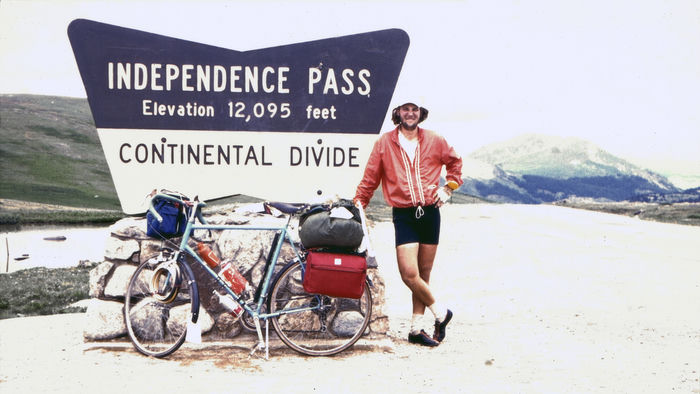
We celebrated the Fourth of July sleeping out on my college friend's parent's deck—in a valley above Missoula, Montana. I was a somewhat callow (and politically naive) young man trying to make sense of the world.
Here we are on the Fourth of July and what of it?…
My friends at school were going to leave the country for fear of the fourth and here it is, the day itself and nothing more. (quote, quote)
I was thinking the 200th birthday might give people pause, might make people aware of how young and old this country is, and try and get in touch with what the day has to teach. Some pretty far out people started this country and some pretty far out people live here now. It's terrible how the beauty of the people and lands of this country can be hidden so easily at times. It used to be that I abhorred people for what they did to the natural world. Now I think I can see man's place a little bit better and I don't recoil from his use of the world as much as his abuse of himself.
The most important thing the founding fathers saw was that people should be given an environment which would lead them not into abuse and futility, but on to growth and happiness. (Journal Entry July 4, 1976)
I can't recall what the (performative?) notion of leaving the country
was responding to. Perhaps the draft. I have to laugh at the phrase far out
—did I really talk that way?! Looking back I can remember the sense of not understanding how the world worked and my place in it. I was trying to sort things out. Trying to write something meaningful. I think I came close by the last sentence.
For context this was just after the first Oil Crisis & Watergate; the struggle for Civil Rights was ongoing, as was the War in Vietnam; and we were deep in the Cold War with its attendant Nuclear Dread. My friends and I were particularly concerned about protecting the Environment. That's why we were on bicycles! 🙂
It occurs to me now why my bicycle was so important. Given the list above, there were not many things I could do as an individual to end the war or avert disaster. But I could choose my mode of transportation. I could choose to use less energy. My bicycle gave me agency. It also gave me a peer group and a sense of belonging. It helped shape who I became.
My Thoughts in 2026
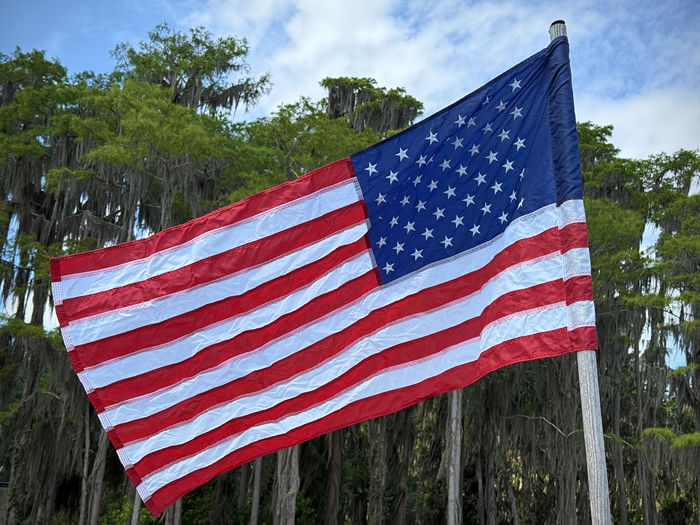
I have to mark this year as disappointed but hopeful.
I'm disappointed that a banal grifter—the Short-Fingered Vulgarian
—Donald Trump is in charge. Or at least he thinks he is. He's not actually that effective as a dictator. He's too worldly and vacuous to provide any vision beyond self-aggrandizement and self-enrichment. He's a narcissist and a liar, but not a true sociopath (in my opinion). We got lucky!
That said, the second Trump term was an unforced error of great magnitude. This is something we did to ourselves! Both major political parties are at fault.
Assuming the voters give us a course correction in November, Trump will be remembered as a failed authoritarian. As such he is a symptom, not the disease. But as any good doctor would remark, Proper treatment depends on accurate diagnosis.
This is the best analysis I've heard for our current circumstances: [1]
- There are
Gamers
who wish to game the system for their own ends. They are a small minority who wish to make themselves more powerful—economically and socially. Senator Mitch McConnell and Elon Musk are good examples. Follow the money!
- There are
Breakers
who wish to tear things down. This group is much larger and much more diverse. Membership is fluid, but Breakers share certain characteristics that make them vulnerable to manipulation by the Gamers: real economic and social problems; a sense that the system is working against them; a sense that others havejumped the line
ahead of them; a sense of victimhood; a sense of fear, anger, etc.
- The Gamers have always manipulated the Breakers to some degree (consider the Contested Election of 1876 for example). But we now live in an age of
infotainment
(news as entertainment), diffuse & unregulated channels of communication, and client capture by large technology companies. At the same time the average citizen has become less able to decern fact from fiction.
Predistribution vs Redistribution
There has been recent interest by authors and podcasters in the idea of Predistribution. This table is based on a recent publication by the Roosevelt Institute.[2] I think their analysis is either wrong or incomplete.
| Mechanism | Public Investment | Market Governance | Tax & Spend |
|---|---|---|---|
| Primary Mode | Predistribution | Predistribution | Redistribution |
| Primary Goal | Equalize Opportunities | Equalize Opportunities | Equalize Outcomes |
| Primary Mechanism | Enhance Capabilities | Balance Power | Reallocate Resources |
| Examples | Public Education, Health, Infrastructure, Industrial Policy | Market Regulation, Corporate Governanace, Antitrust, Social Regulation | Tax Policy & Social Programs |
- They do not mention deliverable Healthcare other than under
regulation
. This is a huge oversight and an oversimplification. - I like how they split out investment from governance. But, investment assumes money comes from somewhere… mostly taxes for the public sector. Investment is really a form of Redistribution (assuming taxes are either neutral or progressive). I think this is circular. We need both!
- Which leaves Governance… the rules of the game. I think the biggest positive effects will come from this sector in the short term. These are often simple changes, and pretty much common sense when viewed in the light of day:
- Prohibiting elected officials from buying stocks while they are in office.
- Prohibiting elected officials from taking jobs as lobbyists for ten years after they leave office.
- Federal judges having time-limited (18-20 year) terms.
- Abolishing the Electoral College.
- Getting corporate money out of elections.
- I could go on…
- The total cost for any/all of the above… $0.
Still Singing to Us

Jimi Hendrix played 'The Star-Spangled Banner' at Woodstock in 1969 and let the war in around the melody. This year the United States turns 250. This Groundwater special steps back from the map to ask what twentieth-century American music has been for: the country's memory, the part of the record that didn't get edited. At its center is Billie Holiday's
Strange Fruit — the song that held a mirror up to lynching, and the song the state went after its singer over… The dark and the joy are the same record.
[3]
Unfinished
Still working on this…
The March of Folly
Folly — A phenomenon noticeable throughout history regardless of place or period is the pursuit by governments of policies contrary to their own interests.
—Barbara Tuchman
Using the tale of the Trojan_Horse as an archetype, she applies her thesis to the Renaissance Popes creating the conditions for the Protestant Reformation, the loss of the American Colonies by England, and America's involvement in the Vietnam War. Her brief summary of the reign of Louis XIV parallels Trump's current reign of terror
almost exactly.
Still relevant after all these years, and a must read for anyone interested in political history. Government remains the paramount area of folly because it is there that men seek power over others — only to lose it over themselves.
Get thee glass eyes;
And like a scurvy politician, seem
To see the things thou dost not.
– William Shakespeare (King Lear)
It’s the Regulation, Stupid by Chris Jones (The Swine Republic, Aug 2026)
https://riverraccoon.substack.com/p/its-the-regulation-stupid
- [1] I'm sorry I cannot recall where I first heard this in order to give proper credit. The ideas are not mine, but they sure ring true!
- [2]
The Predistribution Solution
, https://rooseveltinstitute.org/publications/the-predistribution-solution/, accessed May 2025 - [3]
The Country's Memory: Jimi Hendrix, Strange Fruit, and American Music at 250
, https://groundwater.transistor.fm/episodes/the-countrys-memory-jimi-hendrix-strange-fruit-and-american-music-at-250